
American Silver Eagle Coins: Bullion, Proof, and Burnished Complete Guide
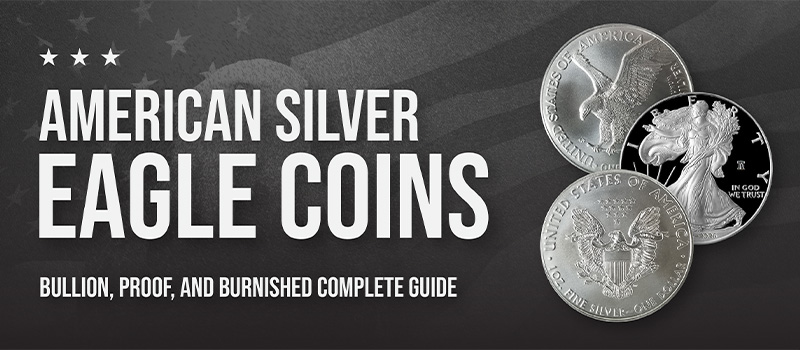
Introduction
If you're serious about silver, the American Silver Eagle is likely already on your radar, and for good reason. First minted in 1986, it remains the world's best-selling silver coin and one of the most recognized by dealers, collectors, and stackers across the United States. But not all Silver Eagles are the same. Bullion, Proof, and Burnished versions each serve a different purpose, and understanding those differences is what separates a smart stacker from an uninformed buyer.
This guide breaks down every major type of American Silver Eagle coin, explains key factors that drive premiums and value, and helps you make confident decisions when adding these iconic coins to your collection.
What Are American Silver Eagle Coins?
American Silver Eagle coins are official U.S. legal tender silver coins struck by the United States Mint. Each coin contains one troy ounce of .999 fine silver. They are produced in three formats, Bullion, Proof, and Burnished, each with distinct finishes, mintage figures, and collector appeal. They carry a $1 face value and are guaranteed by the U.S. government.
Types of American Silver Eagles Explained
Bullion Silver Eagles
Bullion Silver Eagles are produced for stackers and those seeking direct silver content. They are struck on standard planchets, distributed through authorized purchasers (not sold directly by the U.S. Mint to the public), and typically carry the lowest premiums over spot silver price.
Key characteristics:
- .999 fine silver, one troy ounce
- No mint mark (with some exceptions in recent years)
- Struck for mass distribution — highest annual mintage figures
- Most liquid form of Silver Eagle on the secondary market
Bullion Eagles are the go-to choice for those prioritizing silver content and cost efficiency over collectibility.
Proof Silver Eagles
Proof Silver Eagles are collector-grade coins produced using a specialized minting process. Specially polished dies strike highly polished planchets multiple times to create the distinctive frosted relief against a mirror-like background, known as a cameo finish.
Key characteristics:
- Struck at the West Point Mint (W mint mark) or Philadelphia Mint (P mint mark, select years)
- Limited mintage — significantly lower than bullion versions
- Sold directly by the U.S. Mint in presentation packaging
- Include a Certificate of Authenticity
- Premium over spot is substantially higher than bullion
For collectors focused on visual quality, rarity, and long-term appreciation potential, Proof Silver Eagles represent the premium tier of the ASE lineup.
Burnished (Uncirculated) Silver Eagles
Burnished Silver Eagles, officially called "Uncirculated" by the U.S. Mint, occupy the middle ground between bullion and proof. They are hand-loaded onto burnished (polished) planchets before striking, creating a soft, satin finish without the mirror-like field of a proof.
Key characteristics:
- W mint mark (West Point Mint)
- Satin finish — different from both bullion and proof
- Lower mintage than bullion, but generally higher than proof
- Sold directly by the U.S. Mint
- Popular with collectors seeking the W mint mark at lower cost than proof
Burnished Eagles are especially valued by date-and-mint-mark collectors building complete ASE sets.
American Silver Eagle Design: Then and Now
The Original Design (1986–2020)
The original American Silver Eagle featured:
- Obverse: Adolph A. Weinman's "Walking Liberty" design — originally from the 1916–1947 half dollar
- Reverse: John Mercanti's heraldic eagle design
This design ran for 35 years and is among the most recognized silver coin designs in American numismatic history.
The New Reverse Design (2021–Present)
In 2021, the U.S. Mint introduced a redesigned reverse by Emily Damstra, featuring a more dynamic, realistic eagle landing on a branch. The obverse Walking Liberty design was retained.
The transition year (2021) is particularly notable for collectors because it marks the last year of the original reverse and the introduction of the new design, creating significant collector demand and elevated premiums for certain 2021 issues.
Understanding Silver Eagle Premiums
One of the most common questions among new stackers: Why do Silver Eagles cost more than the silver spot price?
Silver Eagle premiums exist because of:
| Factor | Impact on Premium |
|---|---|
| Minting and production costs | Applies to all types |
| U.S. Mint authorized dealer markups | Bullion only |
| Collector demand and mintage rarity | Proof and Burnished |
| Packaging and certification | Proof sets |
| Market supply and demand fluctuations | All types |
| Year-specific rarity or design transitions | Certain dates (e.g., 2021, key dates) |
Bullion Eagles carry the lowest premiums — typically a few dollars over spot during normal market conditions.
Proof Eagles command the highest premiums due to limited mintage, specialized production, and collector demand.
Burnished Eagles fall in between, often representing a premium sweet spot for collectors who want a mint-mark variety without full proof pricing.
Silver Eagle Mintage Data: Why It Matters
Mintage figures directly impact rarity and long-term collector value. Here's a snapshot of notable data points:
- Highest ever annual mintage: 2015 bullion issue — over 47 million coins
- Lowest proof mintage years: Mid-2000s issues, particularly 2011 and 2012 Proof sets, saw relatively lower production
- 2021 Type 1 / Type 2 split: The design transition year produced both reverse types, making date-set completion significantly more complex and expensive
Collectors building complete date sets pay close attention to low-mintage years, as those issues consistently command higher secondary market premiums over time.
Bullion vs. Proof vs. Burnished: Comparison
| Feature | Bullion | Proof | Burnished |
|---|---|---|---|
| Silver Content | 1 troy oz .999 | 1 troy oz .999 | 1 troy oz .999 |
| Finish | Standard strike | Mirror/cameo | Satin/burnished |
| Mint Mark | None (mostly) | W or P | W |
| Mintage | Highest | Lowest | Mid-range |
| Distribution | Authorized dealers | U.S. Mint direct | U.S. Mint direct |
| Packaging | None | Presentation box + CoA | Box + CoA |
| Premium Over Spot | Low | High | Moderate |
| Best For | Stacking silver content | Collecting, display | Mint-mark collecting |
How to Buy American Silver Eagle Coins
When purchasing Silver Eagles, source matters as much as price. Buying from reputable dealers ensures authenticity, proper grading where applicable, and fair market pricing.
Key factors to evaluate when buying:
- Dealer reputation and transparency — look for authorized U.S. Mint purchasers or established numismatic dealers
- Coin condition — for bullion, "BU" (Brilliant Uncirculated) is standard; for collectibles, third-party grading by PCGS or NGC adds security
- Packaging integrity — proof coins should arrive in original U.S. Mint packaging with intact Certificate of Authenticity
- Premium comparison — compare premiums across dealers; wide spreads on common bullion coins are a red flag
Explore the full range of American Silver Eagle coins available at CSN Mint — including bullion, proof, and specialty issues.
Building a Silver Eagle Collection: Practical Tips
Whether you're a first-time buyer or an experienced collector expanding a date set, these tips will help:
- Start with bullion Eagles if you're new to silver — they offer the best price-to-silver-content ratio
- Focus on low-mintage years if long-term rarity is a priority — research annual mintage data before buying
- Consider third-party grading (PCGS/NGC) for proof and burnished coins intended for long-term collection
- Track the 2021 transition — both Type 1 and Type 2 issues are essential for a complete modern set
- Store properly — air-tite capsules or hard plastic slabs protect surfaces; avoid PVC storage
- Compare premiums regularly — silver Eagle premiums fluctuate; patient buyers often find better entry points
Browse the full U.S. Coins collection at CSN Mint for Silver Eagles alongside other classic American coinage.
Where Silver Eagles Fit in a Silver Stack
For dedicated stackers, American Silver Eagles serve several roles:
- Liquidity anchor — universally recognized by dealers worldwide; easiest to sell quickly
- Stack diversification — mixing bullion Eagles with lower-premium rounds gives both flexibility and recognizability
- U.S. legal tender status — unlike generic rounds or bars, Eagles carry a $1 face value backed by the U.S. government
- Storage efficiency — one-ounce rounds are easy to count, store, and transport in standard tubes (20 per tube for bullion Eagles)
For collectors who also stack, Proof and Burnished Eagles add a numismatic layer without abandoning silver content fundamentals.
Explore the full range of silver coins at CSN Mint to see how Silver Eagles compare to other silver options.
Conclusion
American Silver Eagle coins have earned their reputation as the cornerstone of silver collecting in the United States — and for good reason. Whether you're stacking bullion Eagles for silver content, collecting Proof issues for their artistry and rarity, or building a complete date set with Burnished W-mint coins, the ASE lineup offers something for every type of silver enthusiast.
Understanding the differences between types, tracking mintage data, and buying from trustworthy sources are the foundations of a smart silver collection. Start with what fits your goals — and build from there.
Ready to add American Silver Eagles to your collection? Browse Silver Eagles at CSN Mint and explore one of the most complete selections of U.S. silver coinage available.
Frequently Asked Questions
1. What is an American Silver Eagle?
The American Silver Eagle is the official silver bullion coin of the United States, first issued by the U.S. Mint on November 24, 1986. Each coin contains exactly one troy ounce of .999 fine silver with a $1 face value guaranteed by the U.S. government. It is the world's best-selling silver bullion coin, available in three formats: Bullion, Proof, and Burnished.
2. When were Silver Eagle coins first introduced?
American Silver Eagle coins were first introduced in 1986, following the Liberty Coin Act of 1985, which authorized the U.S. Mint to produce silver bullion coins from the national defense stockpile. The first coins were released on November 24, 1986, in both Bullion and Proof formats, and have been produced every year without interruption since.
3. What is the purity of U.S. Silver Eagles?
Every American Silver Eagle contains one troy ounce of .999 fine silver — 99.9% pure. A small amount of copper alloy is added for durability without affecting silver content. The U.S. government guarantees the weight, purity, and content of every coin. This purity level also meets IRS requirements, making Silver Eagles eligible for a self-directed Precious Metals IRA.
4. What are the different types of Silver Eagle coins?
The U.S. Mint produces American Silver Eagles in three formats:
- Bullion – Mass-produced for investors, no mint mark, highest mintage
- Proof – Collector-grade, struck multiple times on polished planchets, mirror-like finish, sold with Certificate of Authenticity
- Burnished (Uncirculated) – Hand-fed onto polished planchets, satin finish, carries "W" West Point mint mark
Special editions like Reverse Proof coins and anniversary sets are also released periodically.
5. What is the difference between bullion and proof Silver Eagles?
Both contain one troy ounce of .999 fine silver, but differ in production and purpose. Bullion Eagles are mass-produced for investors, struck once on standard planchets, carry no mint mark, and are sold at lower premiums. Proof Eagles are struck multiple times on hand-polished planchets, feature a frosted design on a mirror-like field, carry a "W" or "S" mint mark, and come in presentation packaging — commanding higher premiums due to limited mintage and craftsmanship.
6. What are burnished Silver Eagles?
Burnished Silver Eagles, officially called "Uncirculated," were introduced in 2006 for the Silver Eagle's 20th anniversary. They are made by hand-loading polished coin blanks into the press one at a time, producing a smooth satin finish distinct from both bullion and proof coins. All Burnished Eagles carry the "W" West Point mint mark, are sold directly by the U.S. Mint, and have significantly lower mintage — making them popular with date-set collectors.
7. What designs appear on Silver Eagle coins?
The American Silver Eagle features two design periods. The obverse has always shown Adolph A. Weinman's "Walking Liberty" — Lady Liberty striding toward the sunrise — originally used on the Half Dollar (1916–1947). The original reverse (1986–2020) by John Mercanti showed a heraldic eagle with a shield. In 2021, Emily Damstra's new reverse — a realistic bald eagle landing on an oak branch — replaced Mercanti's design after 35 years.
8. What happened to Silver Eagle designs in 2021?
In 2021, the U.S. Mint retired John Mercanti's heraldic eagle reverse after 35 years and introduced a new reverse by Emily Damstra depicting a realistic bald eagle landing on an oak branch, to mark the coin's 35th anniversary. This created two varieties — Type 1 (Mercanti reverse, early 2021) and Type 2 (Damstra reverse, mid-2021 onward) — making 2021 one of the most complex and collectible years in the series.
9. What is the difference between a Type 1 and Type 2 Silver Eagle?
Type 1 Silver Eagles (1986–mid 2021) feature John Mercanti's heraldic eagle reverse — a symbolic design with a shield, olive branch, and arrows. Type 2 coins (mid-2021–present) feature Emily Damstra's naturalistic bald eagle landing on an oak branch, along with enhanced edge security features. Collectors building a complete date set need both Type 1 and Type 2 from 2021, making it the most important and expensive single year in the series.
10. Where is the mintmark on the American Silver Eagle?
The mintmark appears on the reverse of the coin, below the eagle design. Standard Bullion Eagles carry no mintmark. Proof Eagles display a "W" (West Point), "S" (San Francisco), or "P" (Philadelphia) mark depending on the year. Burnished Eagles exclusively carry the "W" mint mark, as they are struck only at the West Point Mint.
11. How many American Silver Eagles are minted?
Mintage varies by format and demand. Bullion Eagles have the highest mintage — the record was set in 2015 with over 47 million coins. The U.S. Mint is legally required to produce enough bullion coins to meet investor demand. Proof Eagles are produced in limited quantities, typically 200,000 to 1 million annually. Burnished Eagles have the lowest mintage, often between 200,000 and 500,000. Low-mintage years typically command higher premiums on the secondary market.
12. What makes some Silver Eagles more valuable?
Key factors that increase a Silver Eagle's value include low annual mintage, coin format (Proof and Burnished command more than Bullion), professional grading by PCGS or NGC (especially MS-70 or PF-70), and historical significance. Notable high-value issues include the 1995-W Proof, the 2019-S Enhanced Reverse Proof, and both 2021 Type 1 and Type 2 coins. Original packaging and an unbroken Certificate of Authenticity also preserve collectible value.
13. Why are some Silver Eagles more expensive than others?
Price differences come down to minting process, mintage volume, collector demand, and market conditions. Bullion Eagles carry the lowest premiums as they're mass-produced and priced near spot. Proof Eagles carry the highest premiums due to limited mintage and labor-intensive production. Burnished Eagles fall in between, offering a lower mintage and West Point mint mark at a more affordable price than proofs. Years with design transitions — like 2021 — carry added premiums due to scarcity and historical significance.
14. Where can American Silver Eagles be bought or sold?
Bullion Eagles are sold through U.S. Mint authorized dealers — not directly by the Mint. Proof and Burnished Eagles are sold via the U.S. Mint's website upon annual release, and through numismatic dealers afterward. When buying, evaluate dealer reputation, premium transparency, and packaging integrity. Silver Eagles are among the easiest silver coins to resell due to their universal recognition — most coin dealers, precious metals exchanges, and online platforms actively buy them.
15. Are American Silver Eagles a good choice for collectors?
Yes. American Silver Eagles are widely considered one of the strongest silver collecting options. Their one troy ounce of .999 fine silver is government-guaranteed, eliminating authenticity risk. They are the most liquid silver coin in the U.S., recognized by dealers worldwide. They also qualify for a self-directed Precious Metals IRA for potential tax advantages. Collector-grade Proof and Burnished issues offer additional numismatic upside, making Silver Eagles a reliable foundation for any physical silver portfolio.
This entry was posted in Silver coins on June 04, 2026 by Priscilla Bennett
About the Author

Hi, I’m Priscilla Bennett, a passionate numismatic expert and content writer at CSN Mint. I love helping collectors and enthusiasts discover the rich stories behind U.S. coins. Through every blog, I aim to make coin collecting more approachable, insightful, and exciting for everyone—from first-time buyers to seasoned collectors.


Leave a comment